


Have you already heard about BHA and AHA?
These are two acids increasingly found in skincare routines. They help achieve a smooth and radiant complexion through chemical exfoliation, and not mechanical as is the case with a simple scrub.
However, be careful to choose the right acid. Indeed, each of them is suited to a different skin type.
In this article, we explain what BHA and AHA are, their benefits for your skin, how to choose between the two, and finally, how to properly integrate them into your skincare routine!
1- BHA: WHAT IS IT?
Beta hydroxy acids (Beta hydroxy acids), BHA, have an effect on the upper part of the skin, as well as inside the pores.
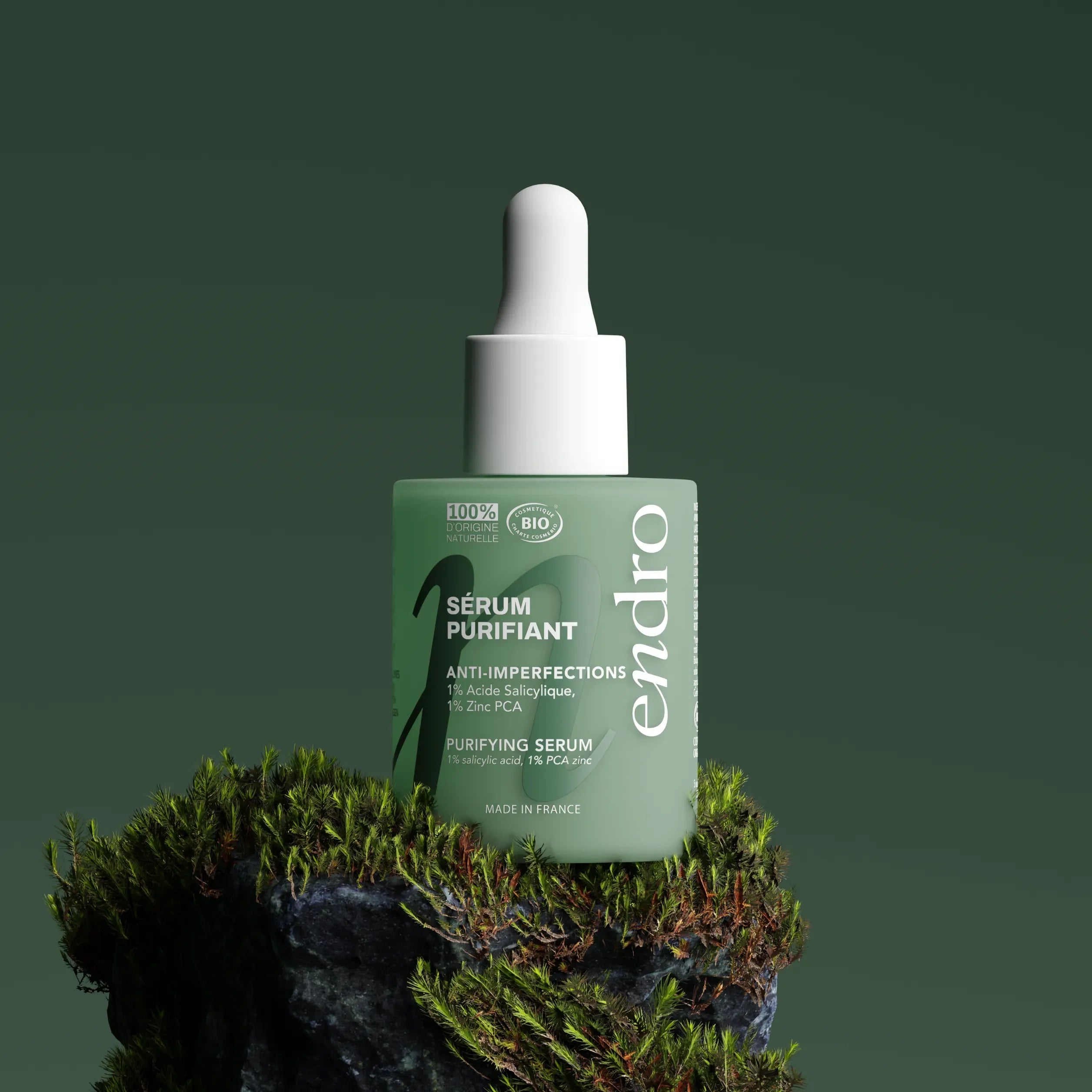
The most common BHA in cosmetics is: salicylic acid . It is a liposoluble acid. It is derived from meadowsweet and white willow. Inhibiting the development of viruses, fungi, and bacteria, it is perfectly suited for oily skin.
A BHA-based lotion can help fight acne by preventing the development of "cutibacterium acnes" (micro-organisms causing the inflammatory reactions characteristic of acne).
In the case of acne, it helps to reduce the pain caused by certain pimples, as well as to reduce redness. Natural origin products exist to treat acne naturally.
The sebum-regulating role of salicylic acid helps reduce the appearance of comedones.
In addition, BHAs promote the removal of dead cells on the surface layer of the skin by breaking their connections, allowing "room" for the renewal of epidermal cells.
The use of BHAs also provides the following benefits:
- purifying action;
- powerful keratolytic action that performs a gentle peel;
- fights inflammation thanks to its soothing properties;
- improves the evenness of skin texture;
- helps eliminate blemishes.
2- AHAs: WHAT ARE THEY?
Alpha hydroxy acids (Alpha hydroxy acid), AHAs are water-soluble acids that act on the surface of the skin.
Different acids make up the AHA category.Among them are: glycolic, lactic, mandelic, citric, and malic acids.
- Lactic acid :
Lactic acid can be obtained from the fermentation of certain fruits or milk. If you have dry skin, choose this one. It is indeed a very gentle acid, making it a good solution for this skin type. Thanks to its use, your skin stays hydrated much more easily (which is essential for caring for sensitive skin).
- Mandelic acid:
Mandelic acid penetrates the skin less deeply than glycolic acid. Its more superficial action has the advantage of greatly minimizing the risk of irritation! This acid, derived from almonds, also helps reduce hyperpigmentation.Finally, mandelic acid helps to even out the skin tone.
- Glycolic acid:
Glycolic acid is the AHA with the best reputation in terms of effectiveness. This active ingredient derived from sugar cane penetrates deeply into the skin. This allows it to have excellent exfoliating action.
Glycolic acid is also used to:
-
give radiance to the skin;
-
regulate sebum production;
-
perform a gentle peel that does not damage the skin barrier.
- Citric acid:
Citric acid, which can be extracted from lemon, helps to brighten the skin and reduce hyperpigmentation.
- Malic acid:
Malic acid is another chemical exfoliant regularly used in cosmetic products. Extracted from apples, it has moisturizing and rebalancing properties for the skin, in addition to stimulating collagen production.

3- ARE BHAs CARCINOGENIC AND ENDOCRINE DISRUPTORS?
The IARC (International Agency for Research on Cancer) has classified them as potentially carcinogenic, but based on studies conducted on a model that cannot be extrapolated to humans.
To date, no data has evaluated the carcinogenicity of BHAs. According to the AFSSAPS, “recent toxicity studies of BHAs suggest a potential endocrine-disrupting effect.”However, these studies make it possible to identify a no-effect dose level, allowing for the calculation of a safety margin.” The concentrations present inside cosmetics are below 0.04 percent.
4- HOW TO PROPERLY ADD AHA/BHA TO YOUR SKINCARE ROUTINE?
As these two acids are powerful actives, it is important to take some precautions before starting to use them.
Do not use them to replace your lotion or moisturizer. In fact, their moisturizing properties are only very light.
Moreover, their primary functions are exfoliation and stimulation of cell renewal: it is therefore even more important to properly hydrate your skin after using AHA or BHA.
By proceeding in this order, you will also achieve better penetration of the cosmetic products applied afterwards.
Why?: Because once your skin is rid of the dead cells that covered it, there is no longer any barrier to the absorption of products by your skin.
Next, remember to be extra vigilant regarding sun exposure. Chemically exfoliating your skin actually thins the stratum corneum, which plays a protective role against UV rays.
That being said, try to get into the habit of applying SPF 50 sunscreen every two hours during the day: this way, you can be sure you are applying enough, no matter what treatments you are using. Ideally, still avoid sun exposure after applying AHA/BHA.
By using these products in the evening before going to bed, you make your life easier by not having to make an effort to avoid exposure to UV rays (unless you sleep in Northern Finland in the middle of summer with the shutters open, but in that case, there’s nothing we can do for you…).
5- CAN AHA AND BHA BE USED TOGETHER?
No, avoid using AHA and BHA at the same time: this may result in exfoliating the epidermis too intensely, which damages the skin barrier and causes irritation.
If you use vitamin C at the same time, it’s not a big deal, just be aware that the benefits of both products will be reduced.
No matter which AHA/BHA-based product you are testing, do it gradually; you can even use it only once during the first week of testing!
Do not force things if you feel your skin is reacting badly: just because a cosmetic is beneficial for many does not mean it will necessarily be beneficial for you!
If you have skin with a special condition such as rosacea or eczema, PHAs (Poly Hydroxy Acids) should be more suitable for you. Lactobionic acid is the most commonly used in this group.
You already have a skincare routine, but would like to improve it? Discover the ideal Korean skincare routine, for taking care of your skin in the long term.



Leave a comment
This site is protected by hCaptcha and the hCaptcha Privacy Policy and Terms of Service apply.